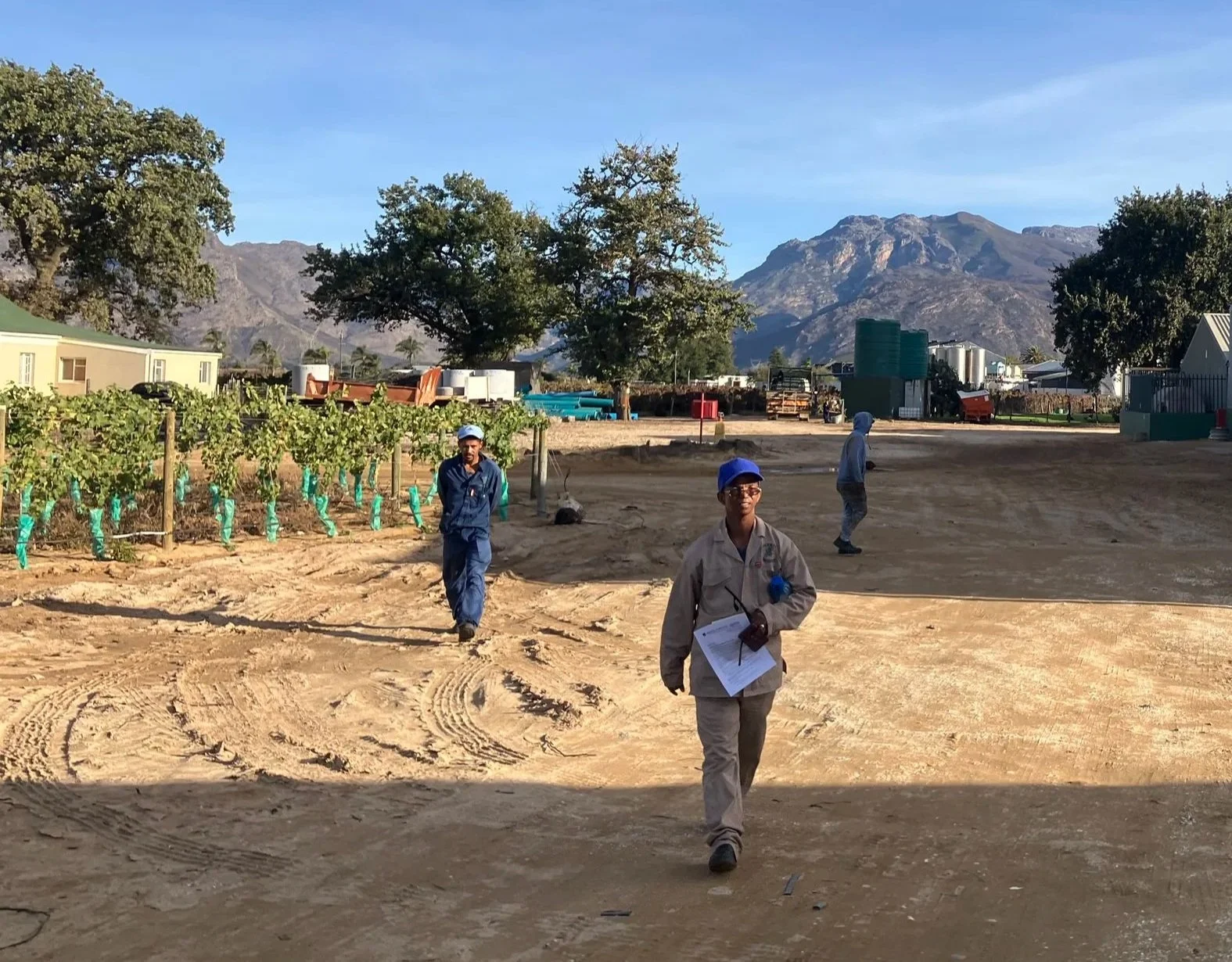
Did you know? The Cape Winelands accounts for over 96% of South Africa’s wine grape production. Behind these numbers are the people who make it possible.
What does it mean for these people to live a basic, but decent life? How much does it cost?
The Anker Research Institute has released the Living Wage Report: Cape Wineland Regions, South Africa 2025 for the region’s main grape growing areas. The study was conducted by Benjamin Stanwix and Jabulile Monnakgotla of the Development Policy Research Unit (DPRU) at the University of Cape Town (UCT) with support from Koen Voorend of the Anker Research Institute, using the internationally recognized Anker Methodology®.
The research team conducted extensive fieldwork across five towns in the Cape Winelands and Overberg districts, including Stellenbosch, Paarl, Robertson, Rawsonville, and Hermanus. This included focus group sessions with farmworkers, visiting workers' homes, surveying prices at supermarkets and informal markets, and gathering cost data from local healthcare facilities, schools, and service providers.
Based on the Anker Methodology®, the resulting living wage estimate reflects what it costs a worker and their family in this region to afford a basic but decent life which includes nutritious food, safe housing, healthcare, education for children through secondary school, clothing, transportation, communication, etc. and a buffer for unexpected events.
While the Western Cape records lower unemployment and poverty rates than the national average, the study found the living wage was 1.4 times the national minimum wage and 1.5 times the current sectoral median wage in the Western Cape.
The study was informed by continuous engagement with a wide range of stakeholders across the sector in the country, and provides a credible, transparent, and replicable basis for ongoing dialogue.
While done with the wine production sector in mind, the report's living wage applies broadly for the entire Western Cape region’s rural areas and therefore also offers a relevant baseline for other agricultural industries in the region.
Acknowledgements
This research was made possible through the collaboration and support of the Anker Research Institute (ARI), Fairtrade Finland's development cooperation programme (funded by the Ministry for Foreign Affairs of Finland), Fairtrade Africa, Fairtrade International, and Social Accountability International (SAI). Special thanks to Axel Kollberg from Systembolaget and Kristian Hogstad from Vinmonopolet for their contributions to the research.
📄 Download the full report: